From Sketch to Scene: Exploring a Filmmaking Workflow with AI
Every major shift in cinema has asked filmmakers to rethink process.
Not because storytelling changed , but because the tools around it did.
This edition is not a guidebook or a definitive method. It’s an R&D-driven exploration , an attempt to understand how traditional filmmaking thinking can shape AI-assisted creation, while keeping narrative intent and discipline intact.
decision that follows.
Beginning with Intent
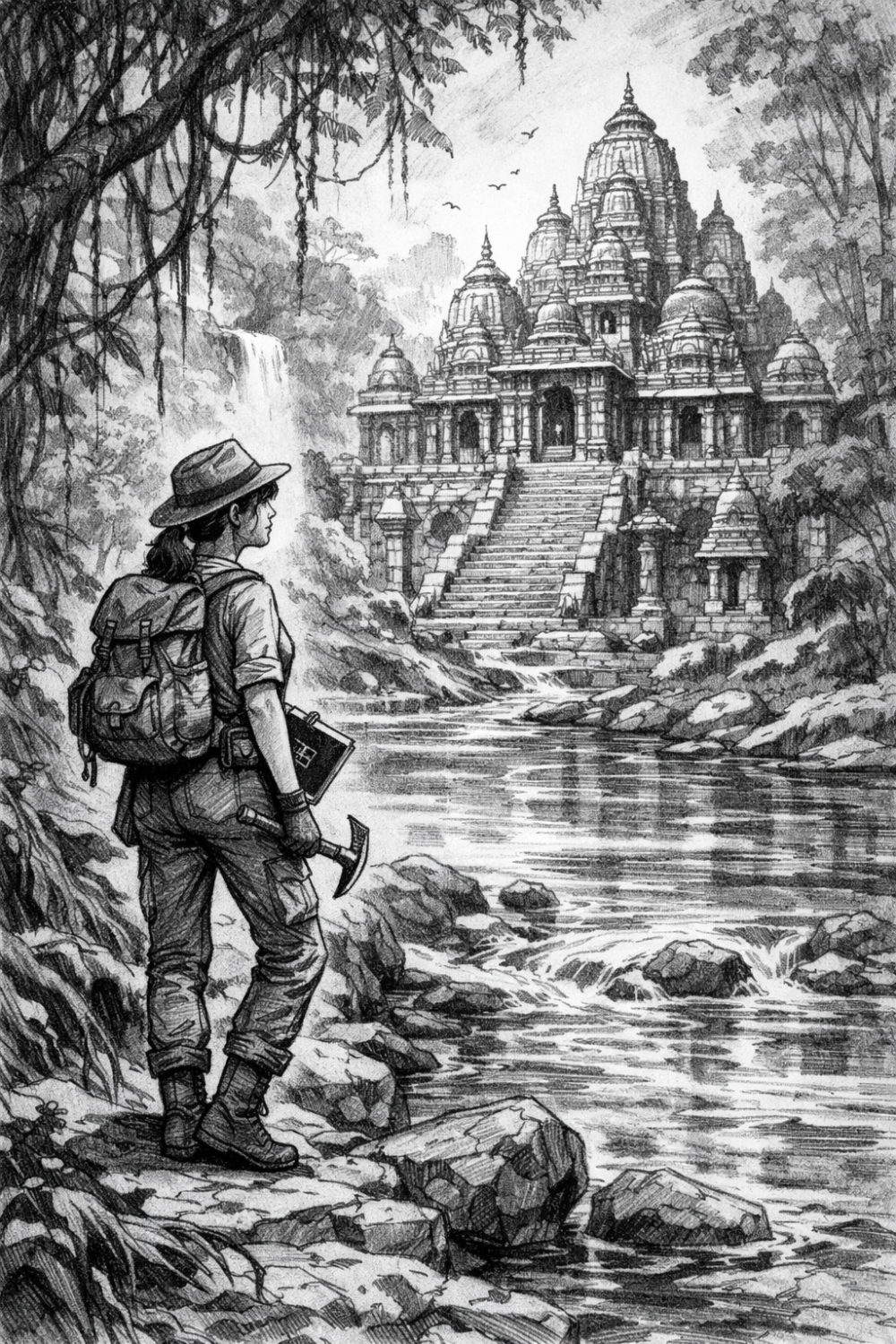
The process began with a simple idea and a clear frame in mind.
Before realism, environments, or motion, the focus was on:
who the character is
the world they belong to
what their costume and gear communicate about function, journey, and context
Starting here matters. Clear intent reduces guesswork later and anchors every decision that follows.
Breaking the Character into Production Elements
Rather than approaching the character as a single visual, it was broken down the way a film production would:
clothing
footwear
accessories
utility gear
Each element was explored independently.
This wasn’t about efficiency — it was about learning how clarity, separation, and structure influence consistency, especially when thinking beyond a single frame.
From Sketch to Material Logic
Sketches were used early not to chase endless variations, but to lock intent.
Those sketches were then translated into visuals guided by material logic:
fabric weight
surface wear
construction detail
practical color choices
The aim was believability. Cinema relies on materials feeling grounded, even in imagined worlds.
Cataloging Before Composition
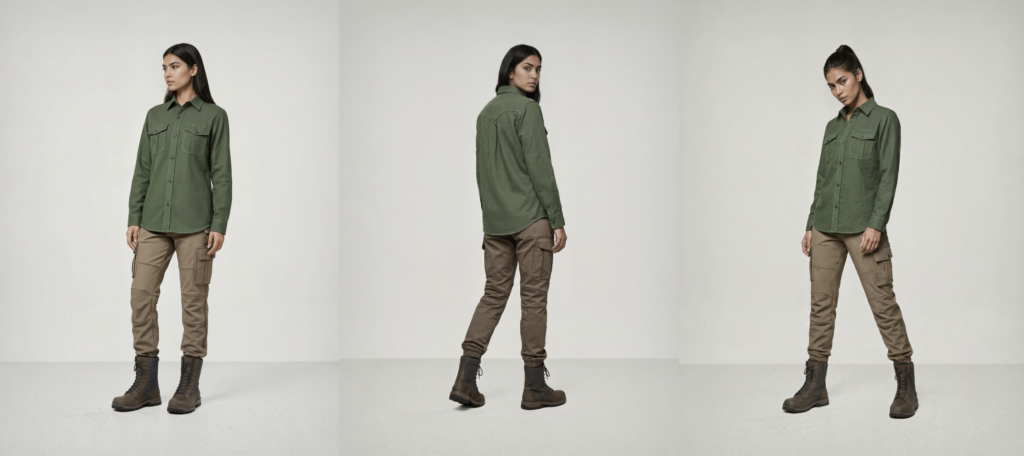
Before placing the character into a world or adding motion, the designed elements were first assigned to a neutral model and reviewed in isolation.
This step mirrors a traditional production check:
validating costume consistency
checking proportions and silhouette
ensuring materials, colors, and construction hold up from multiple angles
By treating the character like a cataloged asset rather than a final shot, issues become visible early – before environment, lighting, or narrative context influence perception.
This stage isn’t about creating a finished frame. It’s about verifying readiness before composition and storytelling take over.
Editorial Validation in Real-World Contexts
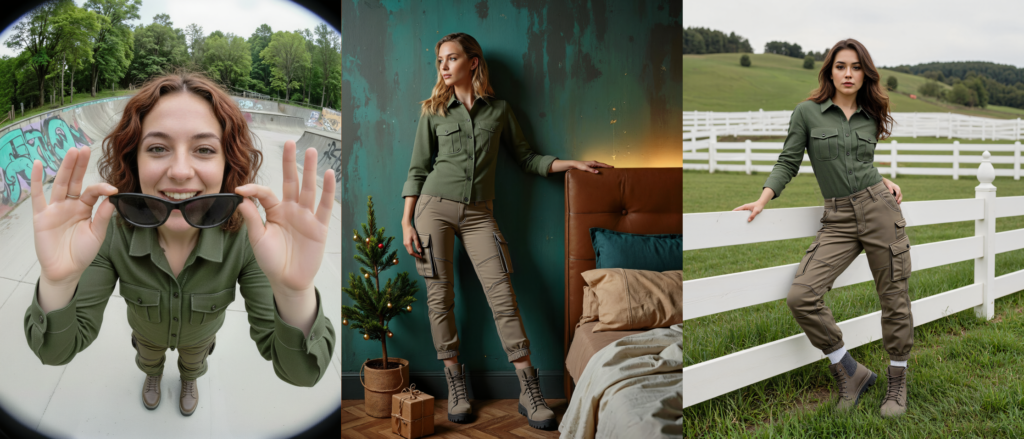
At this stage, the focus shifted from design validation to real-world behavior.
The same character and wardrobe were tested across:
different lighting conditions
varied environments
multiple camera perspectives
This step functions like an editorial or look-test phase in filmmaking – checking whether the design holds up when removed from controlled setups and placed into believable, everyday contexts.
The goal wasn’t stylization or polish. It was to verify that the character, costume, and materials remain consistent and credible regardless of setting.
If something fails here, it usually isn’t a lighting problem – it’s a design or logic problem.
This step helped confirm that the earlier decisions were strong enough to survive context, not just composition.
Assembling the Character
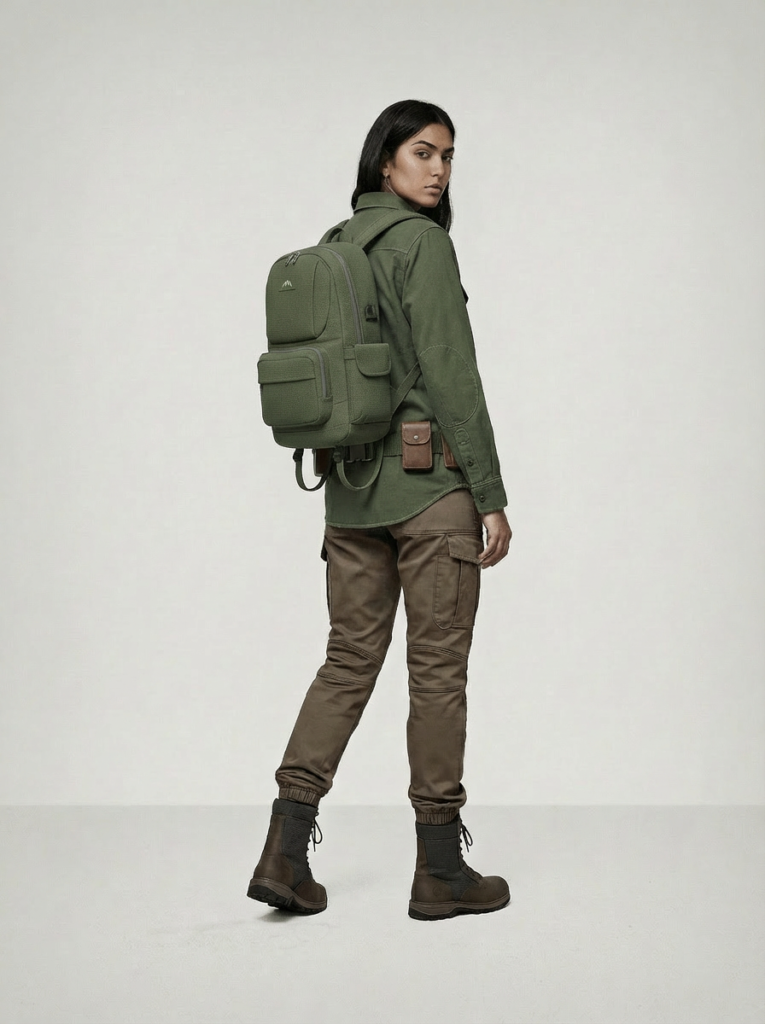
Only after individual elements were explored and reviewed were they applied to a model.
At this stage, the focus was on:
proportion
balance between materials
overall coherence
No new design ideas were introduced here. The goal was simply to see whether earlier decisions worked together as a whole.
Placing the Character into an Environment
With the character resolved, the next step was environmental placement.
The environment was chosen for narrative compatibility – terrain, scale, light, and mood -rather than visual spectacle. Placing the character into a world helped assess whether the design felt believable in context.
This step often reveals things that remain invisible in isolation.
Motion was explored only after the still frame felt complete.
By moving from image to video at the final stage, motion became a way to study presence and rhythm – not a way to compensate for unresolved design or story choices.
The order was intentional.
What This Exploration Highlights
This R&D process emphasized:
clarity before generation
structure before variation
context before motion
It reflects how filmmakers traditionally think – even as new tools enter the pipeline.
This is not the only way to work. It’s simply one exploration into how filmmaking discipline can inform AI-assisted workflows.
This exploration used a combination of AI tools chosen for specific stages of the process.We’ve listed the AI products we regularly test and work with on our AI Product Page.